Culture · Published September 24, 2026
At the Yorùbá Language & Ifá Studies Program, we believe language is never learned in a vacuum. Language lives in song, in celebration, in protest, in the drumbeat of a city at night. That is why our Unit 8 — Media, Arts & Modern Yoruba — takes students on a journey through the music of Yoruba culture: from the palm-wine guitar clubs of colonial Lagos to the protest anthems that shook a nation.
A Language You Can Hear in the Melody
Yorùbá is a tonal language. The pitch of a syllable can change its meaning entirely — and this shapes everything about how Yoruba music works. In jùjú music, the lead guitar often follows the speech-tone patterns of the lyrics, so the guitar seems to speak. The talking drum (dùndún) goes further still: it literally imitates Yoruba tones, "talking" praise phrases and proverbs to the dancers.
When our students listen to this music while following a transcription — with every diacritic intact — they hear the language itself come alive in melody.
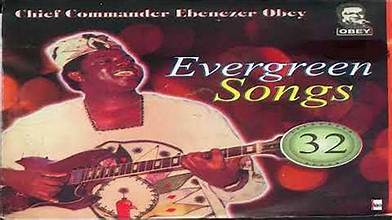
Chief Commander Ebenezer Obey and the Golden Age of Jùjú
Born in 1942 in Idogo, Ogun State, Chief Commander Ebenezer Obey learned guitar in Lagos, apprenticed in Fatai Rolling-Dollar's band, and formed his own band, the International Brothers, in 1964. As leader of Inter-Reformers, he expanded jùjú into a grand, danceable sound — layered guitars, drum kits, and talking drums — and filled his lyrics with Yoruba aphorisms and praise-singing, a modern continuation of the ancient oríkì tradition.
Obey's albums like Board Members (1972) and Current Affairs (1980) became the soundtrack of Yoruba social life: naming ceremonies, weddings, chieftaincy titles. His music teaches as it entertains — patience, gratitude, destiny, community.
And the guitar itself tells an African history story: it arrived through centuries of coastal trade and sailor culture, was transformed by Kru palm-wine fingerpicking, church hymnody, and Afro-Brazilian returnees, and finally became a Yoruba voice — one that "speaks" the language it accompanies.
Fújì: The Music That Wakes the Dawn
Jùjú's great rival came from a different corner of Lagos life. Fújì evolved from wéré — the music performed to wake Muslims before dawn during Ramadan fasting. Its creator, Sikiru Ayinde Barrister (1948–2010), blended wéré with apala, sákárà, and highlife into something new — and named it after a poster of Mount Fuji, Japan, he saw at an airport. (No, it doesn't come from the Yoruba word fáájì, "enjoyment" — a myth worth busting in class!)
Fújì is percussion-driven and voice-led: talking drums, shakers, and rapid-fire call-and-response, with no lead guitar at all. Barrister's protégé K1 De Ultimate and stars like Pasuma carried the genre to mainstream Nigerian stardom.
Fela Kuti: Music as a Weapon
No story of Yoruba music is complete without Fela Anikulapo-Kuti (1938–1997), who fused highlife, funk, jazz, and Yoruba rhythms into Afrobeat — and used it to challenge power itself. Songs like "Zombie" (1977) mocked the military so fiercely that soldiers raided his Kalakuta commune, fatally injuring his mother, the activist Funmilayo Ransome-Kuti. Fela answered with "Coffin for Head of State."
Fela sang mostly in Nigerian Pidgin so all of Africa could hear him — but his music is built on Yoruba chant traditions and call-and-response. And a note for music fans: Afrobeat (Fela's genre) and Afrobeats (today's pop sound) are related but not the same. In January 2026, Fela received a posthumous Grammy Lifetime Achievement Award — the first African artist ever to receive it.
Why This Matters for Language Learners
Music is one of the best doorways into a language. Song lyrics carry proverbs (òwe), praise names (oríkì), and everyday vocabulary in memorable, repeatable form. In our Unit 8 classes, students don't just read about this music — they transcribe and translate actual lyrics using our digital toolkit, Ifá Scribe, following along line by line with the Yorùbá text.
So put on a Chief Commander record. Listen for the guitar answering the voice. That conversation you hear? It's Yorùbá — spoken in strings and skin.
Ẹ jẹ́ ká gbọ́ orin Yorùbá — let us listen to Yoruba music together.
Sources: Wikipedia (Ebenezer Obey; Jùjú music; I.K. Dairo; Fuji music; Sikiru Ayinde Barrister; Fela Kuti; Afrobeat; Palm-wine music), researched September 2026. Recommended reading: Christopher Waterman, Jùjú: A Social History and Ethnography of an African Popular Music (University of Chicago Press, 1990).
Bring the Rhythm into Your Practice
The same tonal awareness that makes Yoruba music so expressive is what we teach in every class. Our students learn to hear the language in melody, to feel the tones in their own voice, and to use tools like Ifá Scribe to transcribe, translate, and practice with real Yoruba texts.
Whether you are drawn to the guitar lines of jùjú, the drum-driven energy of fújì, or the revolutionary spirit of Afrobeat, the path begins with the language itself.
Ready to Make the Language Yours?
The Yorùbá Language Program pairs live instruction, private lessons, and digital tools so language recovery becomes a repeatable practice rather than a loose intention. Unit 8 — Media, Arts & Modern Yoruba — is now in session, and new students are welcome to join.
🎵 Enroll in Unit 8: Hear the language in every chord, every drumbeat, every praise song. Activate your Ifá Scribe access and step into Yoruba music with the full support of our digital toolkit.
Join our live Yorùbá classes and start transcribing the music that speaks your ancestry.
📝 Register for Yorùbá ClassesAlready enrolled? Unlock the full Ifá Scribe toolkit for transcription, translation, and pronunciation practice.
🚀 Activate Ifá Scribe AccessBring this into practice
The Yorùbá Language Program pairs live instruction, private lessons, and digital tools so language recovery becomes a repeatable practice rather than a loose intention.